搜尋結果
共
503
筆符合商品
排序

The Poetry of Enlightenment 開悟的詩偈(英文版)
To my knowledge there are no anthologies of Ch’an poetry in Chinese, Japanese or English which describe in detail the method of practice and the experience of Ch’an Furthermore, there are few prose sources in English dealing with the same topics On the other hand, there are numerous books in English that relate the episodes of the kung-ans(koans)The prevailing view that comes from reading these stories is that the practice of Ch’an is methodless, and since there is no way to describe the experience of Ch’an, it is suggested that we just go ahead and practice by studying the kung-ans The purpose of these poems is different in that they specifically show you how to practice, what attitudes to cultivate and what pitfalls to beware of Finally, they attempt to describe the ineffable experience of Ch’an itself These poems flow directly from the minds of the enlightened Ch’an masters; we get a glimpse into their experience at the time of, and after their enlightenment In contrast, in reading a kung-an we get an objective story of what happened and we don’t really know what was in their minds. It is my hope that this collection of poems will give those who are interested in the practice a new way of looking at Ch’an and a more balanced view of the scope of Ch’an literature The present selection is offered to make this tradition available to Western readers who may otherwise not be aware of their existence.
NT$
$536
|
85折

Footprints in the Snow : The Autobiography of a Chinese Buddhist Monk (雪中足跡英文版精裝)
Master Sheng-Yen has devoted much of his life to spreading the teachings of Chinese Buddhism—a practice that antedates the more familiar Japanese and Tibetan traditions—throughout the world. He became known in the United States after he began founding meditation centers here in 1980. Now in his late seventies, he tells the remarkable story of his life and spiritual education in FOOTPRINTS IN THE SNOW. From descriptions of the private world of Buddhist masters to first-hand accounts of Chinese history, it is a rare document that is both an important look at China’s past and a compelling spiritual journey across a lifetime.Sheng-Yen’s story is of a life lived in the last years of the Republic of China, the Sino-Japanese War, and the founding of the People’s Republic of China. An eye-opening slice of modern history as well as an authoritative introduction to an ancient religious tradition, FOOTPRINTS IN THE SNOW will appeal to spiritual seekers, travelers who want to understand more about China, or anyone looking for a fascinating story.
NT$
$893
|
85折

Hoofprint of the Ox 牛的印跡(英文版)
From The Preface By Dan Stevenson EN. SHENG YEH is a master in the Caodong and Linji lineages of Chan〈Zen〉 school, who for twenty five years now has been guiding students from Taiwan, the United States, and Europe in the practice of Chan Buddhism. Hoofprint of the Ox provides a systematic introduction ─ in Sheng yen,s own words ─ to the principles that inform his particular style of Chan training.... In the final analysis, it is an unabashedly normative work ─ a book on Chan practice addressed to an English speaking audience with a personal interest in Buddhism. To the extent that this audience is also primarily Western, Hoofprint is more than passive report of Sheng yen,s personal convictions. It situates those convictions in responsive relation to specific expectations about Chen practice current among Western students, with specific points to be made.
NT$
$1,071
|
85折
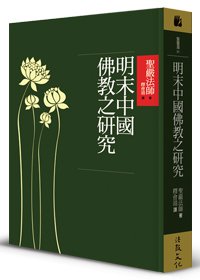
明末中國佛教之研究
整體而言,著者掌握了向來從未有人研究過智旭的整體像狀。以往的研究者,都一致認定智旭是明末一位傑出的天台學者,但著者認為他不僅是一位佛教學者,根本就是一位虔誠、堅定而徹底的佛教生活實踐者。著者所掌握到的此一新見解,著實應給予崇高的評價。──鎌田茂雄本書不僅徹底闡述智旭個人的事蹟與思想,也於中國近代佛教史上尚未研究周全之處,投下一道強大的光柱,這正是應該向學術界鄭重推薦的優秀著述。──金倉圓照蕅益智旭,為明末佛教「四大師」(紫柏真可、雲棲袾宏、憨山德清)之一,是一位梵行卓越又義學高深的一代宗師。他的整個生涯,在生活行履方面,是以《梵網經》為中心;在信仰行為方面,是以《地藏菩薩本願經》和《占察善惡業報經》為中心;在教理哲學思想方面,則是以《楞嚴經》為中心,而成就其一生的思想體系。本書是聖嚴法師於一九七五年完成的日本博士論文,為法師細讀蕅益大師現存五十一種、計二百二十八卷著作的研究成果。內容主要探究大師一生的信仰、思想、學理,乃至修行境界。全書二十餘萬言,共分五大章:智旭的時代背景、智旭的生涯、智旭的宗教實踐、智旭的著作,以及智旭思想的形成與發展,全書結構嚴謹、論理縝密。透過聖嚴法師淵博的學識及獨到的見地,引領讀者深入蕅益大師的內心世界,體解大師「事事為道業,處處為眾生」的悲心宏願。
作者簡介
聖嚴法師(1930〜2009年)聖嚴法師1930年生於江蘇南通,1943年於狼山出家,後因戰亂投身軍旅,十年後再次披剃出家。曾於高雄美濃閉關六年,隨後留學日本,獲立正大學文學博士學位。1975年應邀赴美弘法。1989年創建法鼓山,並於2005年開創繼起漢傳禪佛教的「中華禪法鼓宗」。聖嚴法師是一位思想家、作家暨國際知名禪師,曾獲臺灣《天下》雜誌遴選為「四百年來臺灣最具影響力的五十位人士」之一。著作豐富,中、英、日文著作達百餘種,先後獲頒中山文藝獎、中山學術獎、總統文化獎及社會各界的諸多獎項。聖嚴法師提出「提昇人的品質,建設人間淨土」的理念,主張以大學院、大普化、大關懷三大教育推動全面教育,相繼創辦中華佛學研究所、法鼓文理學院、僧伽大學等院校,也以豐富的禪修經驗、正信的佛法觀念和方法指導東、西方人士修行。法師著重以現代人的語言和觀點普傳佛法,陸續提出「心靈環保」、「四種環保」、「心五四運動」、「心六倫」等社會運動,並積極推展國際弘化工作,參與國際性會談,促進宗教交流,提倡建立全球性倫理,致力世界和平。其寬闊胸襟與國際化視野,深獲海內外肯定。
作者
譯者
釋會靖(關世謙)
NT$
$515
|
78折
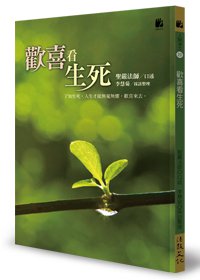
歡喜看生死
一般人對於未來不確定的命運與財產,多半會精心安排,甚至不必要地擔憂,然而對生命中唯一確知的一件事——死亡,卻多所避諱,既不了解也常未預先準備。這個矛盾的現象透露出人對生命太過執著,對死亡太過抗拒。雖然生死是必然的因果關係,但是聖嚴法師以修行多年的智慧,提出佛教超越生死的豁達觀念,教導大家以願力來豐富生命,時時抱持活在當下的態度,便能真正掌握自己的心念,進而無懼於生死,開展出更廣闊、更完整的人生。法師勉勵我們,生時珍惜生命,抱著「以他為我」的無我精神,成長自己、成就他人;死時莊嚴安詳、無憂無懼。如此歡喜看生死,生死皆歡喜!
NT$
$126
|
7折
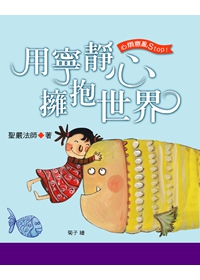
用寧靜心擁抱世界
在滾滾紅塵中,如何安心做自己?只有清楚明白自己的心,才能不受外境風雨的影響,用寧靜心擁抱世界。本書共收錄聖嚴法師24篇精采300字短文,並邀請知名插畫家菊子精心繪製溫馨幽默的插圖,提供讀者在忙亂生活保持寧靜心的妙法。
作者
NT$
$77
|
78折



正在載入更多商品......