搜尋結果
共
163
筆符合商品
排序
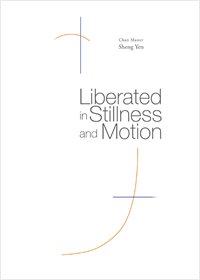
Liberated in Stillness and Motion 動靜皆自在(英文版)
Live a life of ease and freedom, on the basis of peace and solidity, with the principle of being less agitated and affected.
Many masters in the history of Chinese Chan Buddhism emphasized practice as daily living. Whether monastic or lay, a follower uses the concepts and methods of Chan in daily life. By doing so, one experiences calmness and ease while being spontaneous and lively amidst mundane reality. Chan is not a religion, not a philosophy, and surely not mysterious or weird sorcery. It is the wisdom of living, the cultivation of body and mind, and a principle and guideline for spiritual development. It is also the best method for influencing and purifying the environment.--Master Sheng Yen
作者簡介
Master Sheng Yen (1930-2009)
Master Sheng Yen was born in 1930 and became a monk in 1943. He conducted a six-year solitary retreat, after which he went to Japan for further study and obtained a doctorate in Buddhist literature at Rissho University. In 1975, he began sharing the Dharma in the US, and in 1989, founded the Dharma Drum Mountain organization. In 2005, he established the Dharma Drum Lineage of Chan Buddhism, as an effort to reinvent Chinese Buddhism.
He authored more than 100 publications in Chinese, English, and Japanese, and received the Sun Yat-sen Art and Literary Award, the Sun Yat-sen Academic Award, and the Presidential Cultural Award, among other honorary awards.
He proposed the vision of "uplifting the character of humanity and building a pure land on earth," founded the Chung-Hwa Institute of Buddhist Studies, Dharma Drum Institute of Liberal Arts, and Dharma Drum Sangha University. Experienced in Chan using correct approaches, he guided practice in both the West and East. Popularizing the Dharma in modern language, the Master initiated movements including Protecting the Spiritual Environment, Four Kinds of Environmentalism, the Fivefold Spiritual Renaissance Campaign, and the Six Ethics of the Mind. He shared the Dharma globally with a broadminded perspective, winning him worldwide recognition.
作者
NT$
$306
|
85折
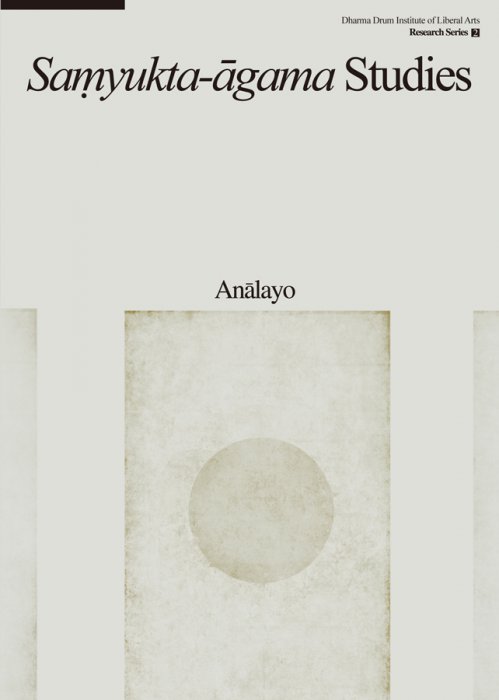
(英文版) 雜阿含研究 Saṃyukta-āgama Studies
The present book collects research papers by Bhikkhu Anālayo with translations of Saṃyukta-āgama discourses and comparative studies of their Pāli parallels, together with two appendices on the relationship between commentary and discourse as well as on the Udāna collection. Topics taken up in the course of the studies are the four noble truths as a diagnostic scheme, concern for the welfare of others, the transfer of merit, humour, Aṅgulimāla, teachings to laity, attitudes towards nuns, arahants and suicide, teaching and awakening, the gender-inclusiveness of the address 'monk', the acrobat simile, mindfulness of breathing, the Buddha's first discourse, self-cremation, and the Buddha's visit to his mother in the Heaven of the Thirty-three.
作者簡介
Bhikkhu Anālayowas born in Germany in 1962 and ordained in Sri Lanka in 1995. He completed a Ph.D. thesis at the University of Peradeniya (Sri Lanka) in 2000 and a habilitation thesis at the University of Marburg (Germany) in 2007. At present he is a professor at the University of Hamburg, Numata Center for Buddhist Studies (Germany), and a researcher at the Dharma Drum Institute of Liberal Arts (Taiwan).
作者
NT$
$527
|
85折
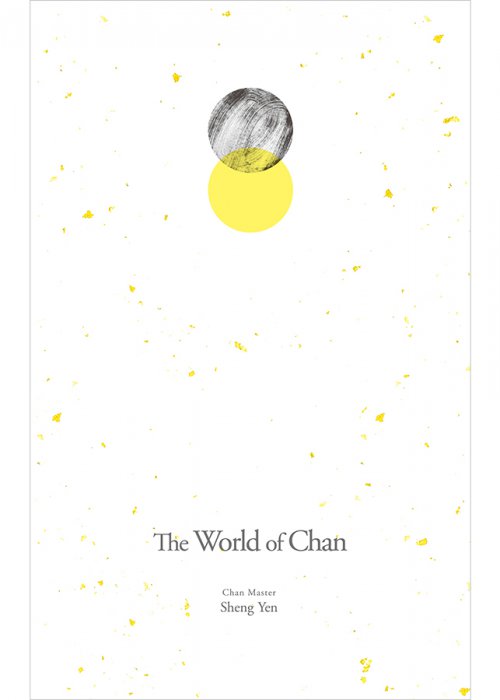
The World of Chan 禪的世界(英文版)
Chan is not necessarily any one thing, nor does Chan affirm or deny anything. However, whatever you need, Chan gives to you.
For regular meditators, this book provides basic sitting meditation techniques. Exceptionally busy people are advised to try and use the Chan cultivation methods in this book to harmonize themselves, and dissolve their attachment to "self." From relaxing the body and mind for as little as three minutes to attending to body and mind throughout daily life, these methods show the simplicity and practicality of expedient Chan methods.--Master Sheng Yen
作者簡介
Master Sheng Yen (1930-2009)
聖嚴法師1930年生於江蘇南通,1943年於狼山出家,後因戰亂投身軍旅,十年後再次披剃出家。曾於高雄美濃閉關六年,隨後留學日本,獲立正大學文學博士學位。1975年應邀赴美弘法。1989年創建法鼓山,並於2005年開創繼起漢傳禪佛教的「中華禪法鼓宗」。
聖嚴法師是一位思想家、作家暨國際知名禪師,曾獲臺灣《天下》雜誌遴選為「四百年來臺灣最具影響力的五十位人士」之一。著作豐富,中、英、日文著作達百餘種,先後獲頒中山文藝獎、中山學術獎、總統文化獎及社會各界的諸多獎項。
聖嚴法師提出「提昇人的品質,建設人間淨土」的理念,主張以大學院、大普化、大關懷三大教育推動全面教育,相繼創辦中華佛學研究所、法鼓佛教學院、僧伽大學、法鼓大學等院校,也以豐富的禪修經驗、正信的佛法觀念和方法指導東、西方人士修行。
法師著重以現代人的語言和觀點普傳佛法,陸續提出「心靈環保」、「四種環保」、「心五四運動」、「心六倫」等社會運動,並積極推展國際弘化工作,參與國際性會談,促進宗教交流,提倡建立全球性倫理,致力世界和平。其寬闊胸襟與國際化視野,深獲海內外肯定。
Master Sheng Yen was born in 1930 and became a monk in 1943. He conducted a six-year solitary retreat, after which he went to Japan for further study and obtained a doctorate in Buddhist literature at Rissho University. In 1975, he began sharing the Dharma in the US, and in 1989, founded the Dharma Drum Lineage of Chan Buddhism.
He authored more than 100 publications in Chinese, English, and Japanese, and received the Sun Yat-sen Art and Literary Award, the Sun Yat-sen Academic Award, and the Presidential Cultural Award, among other honorary awards.
He proposed the vision of “uplifting the character of humanity and building a pure land on earth,” founded the Chung Hwa Institute of Buddhist Studies, Dharma Drum Buddhist College, Dharma Drum Sangha University, and Dharma Drum University. Experienced in Chan using correct approaches, he guided practice in both the West and East. Popularizing the Dharma in modern language, the Master initiated movements including Protecting the Spiritual Environment, Four Kinds of Environmentalism, the Fivefold Spiritual Renaissance Campaign, and the Six Ethics of the Mind. He shared the Dharma globally with a broadminded perspective, winning him worldwide recognition.
作者
NT$
$510
|
85折
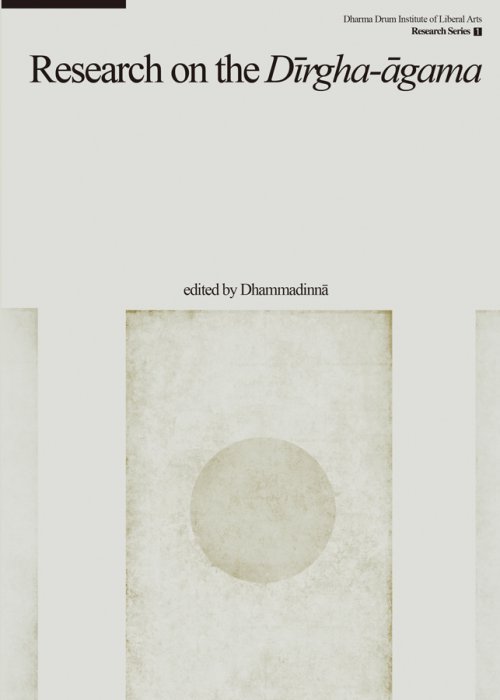
(英文版) 長阿含經研究論文集 Research on the Dīrgha-āgama
This is the second volume of proceedings of the Āgama seminars convened by the Āgama Research Group at the Dharma Drum Institute of Liberal Arts (formerly Dharma Drum Buddhist College). On this occasion, the Āgama Research Group met to discuss the early collections of long discourses transmitted by the different Buddhist schools. Thanks to the discovery and ongoing publication of the incomplete Sanskrit Dīrgha-āgama manu¬script from Gilgit, three different versions of the Collec¬tion of Long Discourses are now avail¬able for comparative study: the Pali Dīgha-nikāya transmitted within the Theravāda tradition, the just-mentioned Dīrgha-āgama in Sanskrit, identified as Sar¬vās¬ti-vāda or Mūlasarvāstivāda, and the Chinese translation of an Indic Dīrgha-āgama (長阿含經), generally considered to be affiliated with the Dhar¬ma¬¬guptakas. The six papers collected here focus on research on these various incarnations of the collections of long discourses in comparative perspective.
作者簡介
About the editor:Sāmaṇerī DhammadinnāDharma Drum Institute of Liberal Arts
About the contributors:Bhikkhu AnālayoNumata Center for Buddhist Studies, University of Hamburg &Dharma Drum Institute of Liberal Arts
Roderick S. BucknellUniversity of Queensland
Toshiichi Endo (遠藤敏一)Centre of Buddhist Studies,The University of Hong KongJens-Uwe HartmannLudwig-Maximilians-Universität of Munich
Jen-jou Hung (洪振洲)Dharma Drum Institute of Liberal Arts
Seishi Karashima (辛嶋靜志)The International Research Institute for Advanced Buddhologyat Soka University
作者
NT$
$272
|
85折
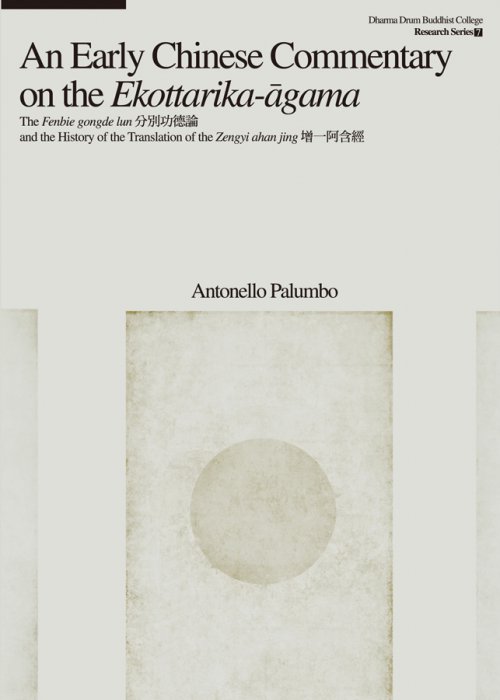
An Early Chinese Commentary on the Ekottarika-āgama
This study reassesses an old problem in the history of Chinese Buddhism, the origins and nature of the Zengyi ahan jing 增一阿含經 (Taishō 125). It does so by a close investigation of the Chinese translation of the Ekottarika-āgama at the end of the fourth century and of its most important witness, the Fenbie gongde lun 分別功德論 (Taishō 1507). It is argued that the latter document, whose original title was Zengyi ahan jing shu 增一阿含經疏, should be seen as an unfinished commentary to the newly translated collection, produced within the original translation team (including Dao’an 道安, Zhu Fonian 竺佛念 and the Indo-Bactrian master Dharmananda) during the tumultuous end of the Qin秦 empire of Fu Jian苻堅in A.D. 385. This reconstruction yields further insights into the cultural origins of the Chinese Ekottarika-āgama, and its broader significance for the history of Buddhism.
作者簡介
Antonello Palumbo is Lecturer in Chinese Religions at the School of Oriental and African Studies, University of London
NT$
$391
|
85折

Things Pertaining to Bodhi: The Thirty-Seven Aids to Enlightenment 三十七道品:菩提之路
The Thirty-seven Aids to Enlightenment are a set of fundamental teachings of Buddhism in the form of a list. The list’s seeming simplicity belies the fact that it is in fact a kind of road map to enlightenment for anyone who follows it with diligence and sincerity. The Thirty-seven Aids comprise seven practices conducive to awakening. Each of the seven practices is itself a set of elements, which add up to the total of thirty-seven: (1) The Four Foundations of Mindfulness, (2) The Four Proper Exertions, (3) The Four Steps to Magical Powers, (4) The Five Roots, (5) The Five Powers, (6) The Seven Factors of Enlightenment, and (7) The Noble Eightfold Path. Master Sheng Yen’s down-to-earth teachings take the reader on a progression through each of the practices—many of which are familiar to all major schools of Buddhism—illustrating how they relate to the reader’s own practice on the path toward enlightenment.
作者
NT$
$791
|
85折
Madhyama-āgama Studies
The present book collects various research papers by Bhikkhu Anālayo with translations of Madhyama-āgama discourses and a comparative study of their Pāli parallels, together with a brief discussion, found in the appendix, of the school affiliation of the Madhyama-āgama and its relation to the Majjhima-nikāya. The main emphasis in these studies is on detecting possible transmission errors in the Pāli versions through the help of the parallel Madhyama-āgama discourse. Topics taken up in the course of the different studies are the Buddha’s decision to teach, the role of investigation in early Buddhism, the notion of a recluse, the relationship between tranquillity and insight, the lateness of the dictum that a woman cannot be a Buddha, the beginnings of the Abhidharma, meditation on emptiness in early Buddhism, the development of the arahant ideal, the canonical account of the founding of the order of nuns, and the relationship between karma and liberation.
作者簡介
Bhikkhu Anālayo was born in Germany in 1962 and ordained in Sri Lanka in 1995. He completed a Ph.D. thesis at the University of Peradeniya (Sri Lanka) in 2000 and a habilitation thesis at the University of Marburg (Germany) in 2007. At present, he teaches at the Center for Buddhist Studies, University of Hamburg, and researches at Dharma Drum Buddhist College (Taiwan).
作者
NT$
$553
|
85折
尋找善知識:《華嚴經》善財童子五十三參
善財童子參訪各行各業的人物,不分身分高低皆一一禮敬。禮敬,讓善財童子的生命圓滿,因為每個人都有取之不盡的無盡寶藏,所以,放下自我,禮敬一切,是圓滿生命的下手處。人生就是一場尋訪善知識的旅行,有緣相會的都是善知識,但看我們能否識得無盡藏!《華嚴經》無限浩瀚、究竟圓滿的佛境界,向來是追求心靈智慧者所嚮往的。而〈入法界品〉中善財童子五十三參的故事,堪稱經中最為人熟知、表現之情境也最為豐富的篇章,內容講述的是善財童子為了求道而參訪各式各樣的人物,從中獲得智慧啟蒙的過程。本書作者擁有深厚的華嚴研究背景,但她在本書卻以容易被現代人接受的文學手法,重新詮釋這些精彩動人的故事。書中將龐大的五十三參內容分為四大部,分別呼應「自然本真的回歸」、「大隱於市的脫俗」、「覺醒的夢中遊戲」,以及「萬法的圓滿具足」的境界,以此爬梳並探討善知識所展現的生命智慧與生活藝術。隨著作者優美流暢的文字,莊嚴華美的意境鋪展眼前,讀者也彷彿伴著善財童子踏上一段尋訪善知識的旅程,心中對圓融智慧的體會,也隨之漸行漸深……。
作者簡介
陳琪瑛國立臺灣師範大學文學博士,著有《《華嚴經.入法界品》空間美感的當代詮釋》一書,和碩士論文〈《華嚴經》美學之研究〉,以及〈《華嚴經》文學美的表現〉、〈善財童子參訪圖研究〉、〈由《莊子》的「凝神」談文學創作的美感心靈〉、〈夢中若不覺,枉作夢一場——由《枕中記》談唐人小說中的佛學思想〉等單篇論文數十篇。
作者
NT$
$272
|
85折
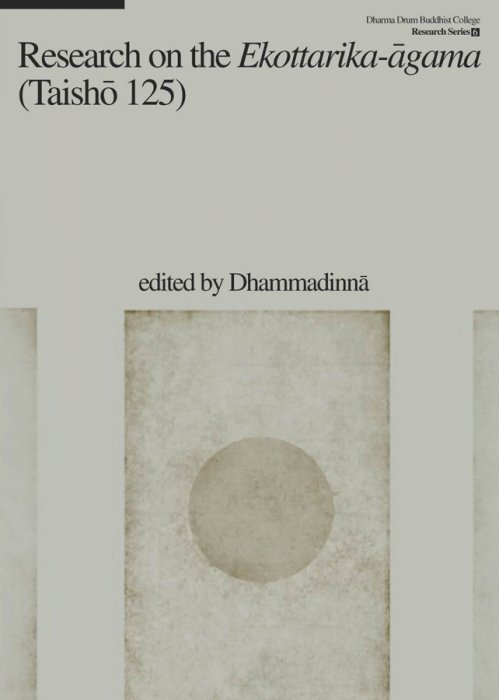
Research on the Ekottarika-āgama (Taishō 125)
This volume contains the proceedings of a workshop on the Chinese translation of the Ekottarika-āgama, the Zengyi ahan jing (增壹阿含經), Taishō no. 125, held at Dharma Drum Buddhist College in April 2012. The papers included focus on different aspects of the translation of this early Buddhist canonical collection: its school affiliation; the relationship of its textual materials to Indian Mahāsāṃghika and Mahāyāna milieux; the incorporation of late elements in the course of revisions or additions effected in China; collaborative quantitative text analysis and authorship attribution applied to verify the philological hypothesis of later additions to the collection; structural aspects that can be reconstructed on the basis of its summary stanzas and of scriptural quotations in other works.
作者簡介
Bhikkhu AnālayoUniversity of Hamburg, GermanyDharma Drum Buddhist College (法鼓佛教學院), Taiwan
Satoshi Hiraoka (平岡 聡)Kyōto Bunkyō University (京都文教大学), Japan
Jenjou Hung (洪振洲)Dharma Drum Buddhist College (法鼓佛教學院), Taiwan
Tsefu Kuan (關則富)Yuan Ze University (元智大學), Taiwan
Ken Su(蘇錦坤)Hsinchu City (新竹市), Taiwan
NT$
$298
|
85折
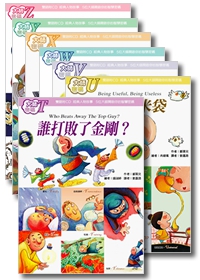
大師密碼T-Z 第四輯組合(七冊合購 7書+7CD)
全彩精裝繪本、中英雙語系列書--《大師密碼》,附CD,專為國小中高年級、國中青少年量身訂做,故事精彩、插畫美不勝收、印刷精美,連大人也愛不釋手。 書中收錄五個精彩的大師故事,萃取大師的人格密碼,直接學習大師的 成功特質,適合忙碌的現代人,又絕對不失原味,是目前市面上最具創意,製作最精美的的佛教青少年繪本,培養優秀人格,同時學習英語,是學佛的父母最好的選擇,學佛的青少年們,也一定要看!
貼心設計‧專業編審
本書集合了當代優秀的文學作家、插畫名家、專業童書翻譯、中美英文審稿、佛學學者,全新創作出最適合青少年朋友閱讀的佛教勵志文學讀本。不但附送英文CD方便學習,並有「大師小檔案」、「佛學名詞解釋」、「英文單字表」,增強閱讀知識。所以閱讀本書,除可以學習大師們的經典智慧密碼,還可以提昇中文、英文的語言能力。 精美插畫‧美的饗宴
全套26集將由劉建志、果祥、林威敏、蘇力卡、劉小琦、沙奇...等多名專業繪者展現出大師密碼最耐人尋味的畫面,充分展現出大師世界的大格局,絕對是讓人值得好好珍藏的經典作品。
作者
NT$
$1,330
|
5折
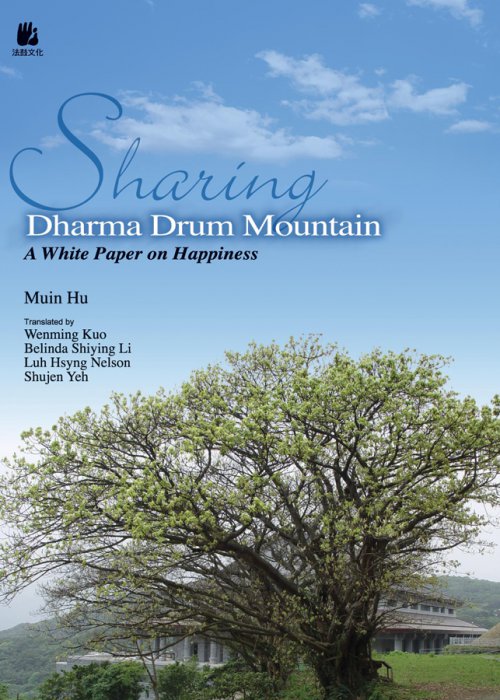
Sharing Dharma Drum Mountain
分享法鼓山的英文翻譯版。本書記錄法鼓山佛教體系的由來、前身、創建的經過以及未來的展望。法鼓山創建於1989年,以「提昇人的品質,建設人間淨土」為理念,透過內在修持、現代文教活動、人文社會的建立、推動心靈環保,開發人人心中的智慧與慈悲。法鼓山的硬體工程亦同時開展。時值2005年,法鼓山的第一期工程即將落成,這是法鼓山新紀元的開始,也是法鼓山長久以來一個想望的實現。當此夢想開花結果的前夕,邀請大家來分享法鼓山,分享法鼓山由來的心願。
作者
NT$
$153
|
85折
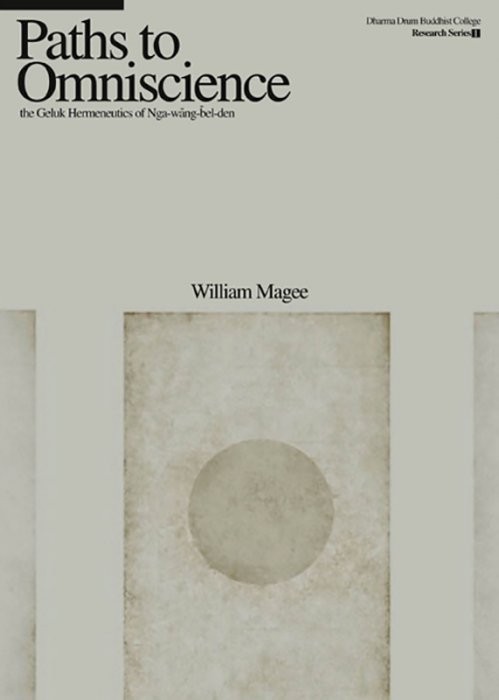
Paths to Omniscience: the Geluk Hermeneutics of Nga-wāng-bel-den
Buddhism suggests that it is possible to investigate the nature of reality ourselves; but to do so one needs to differentiate definitive teachings from those of interpretable meaning. William Magee’s book, Paths to Omniscience, discusses a number of topics related to the interpretation of scripture according to Dzong-ka-ba, Jam-yang-shay-ba, Nga-w?ng-bel-den, and other great scholars of the Geluk world. Paths to Omniscience also addresses the Geluk approach to the practice of hermeneutics. Even within the lineage itself, scholars have not always agreed about interpretation of scripture. Paths to Omniscience describes intricate maneuvers enlivening the spirited controversies of these emminent Lamas. Paths to Omniscience also includes translations of thirty annotations from Nga-w?ng-bel-den’s Annotations for (Jam-yang-shay-ba’s) "Great Exposition of Tenets". These annotations show how diverse and wide-ranging a great commentarial author can be in his treatment of the basic text. Far from being mere footnotes to Jam-yang-shay-ba, the Annotations can instead be viewed as a seminar on his Great Exposition of Tenets.
NT$
$383
|
85折

The Poetry of Enlightenment 開悟的詩偈(英文版)
To my knowledge there are no anthologies of Ch’an poetry in Chinese, Japanese or English which describe in detail the method of practice and the experience of Ch’an Furthermore, there are few prose sources in English dealing with the same topics On the other hand, there are numerous books in English that relate the episodes of the kung-ans(koans)The prevailing view that comes from reading these stories is that the practice of Ch’an is methodless, and since there is no way to describe the experience of Ch’an, it is suggested that we just go ahead and practice by studying the kung-ans The purpose of these poems is different in that they specifically show you how to practice, what attitudes to cultivate and what pitfalls to beware of Finally, they attempt to describe the ineffable experience of Ch’an itself These poems flow directly from the minds of the enlightened Ch’an masters; we get a glimpse into their experience at the time of, and after their enlightenment In contrast, in reading a kung-an we get an objective story of what happened and we don’t really know what was in their minds. It is my hope that this collection of poems will give those who are interested in the practice a new way of looking at Ch’an and a more balanced view of the scope of Ch’an literature The present selection is offered to make this tradition available to Western readers who may otherwise not be aware of their existence.
NT$
$536
|
85折

Footprints in the Snow : The Autobiography of a Chinese Buddhist Monk (雪中足跡英文版精裝)
Master Sheng-Yen has devoted much of his life to spreading the teachings of Chinese Buddhism—a practice that antedates the more familiar Japanese and Tibetan traditions—throughout the world. He became known in the United States after he began founding meditation centers here in 1980. Now in his late seventies, he tells the remarkable story of his life and spiritual education in FOOTPRINTS IN THE SNOW. From descriptions of the private world of Buddhist masters to first-hand accounts of Chinese history, it is a rare document that is both an important look at China’s past and a compelling spiritual journey across a lifetime.Sheng-Yen’s story is of a life lived in the last years of the Republic of China, the Sino-Japanese War, and the founding of the People’s Republic of China. An eye-opening slice of modern history as well as an authoritative introduction to an ancient religious tradition, FOOTPRINTS IN THE SNOW will appeal to spiritual seekers, travelers who want to understand more about China, or anyone looking for a fascinating story.
NT$
$893
|
85折

Hoofprint of the Ox 牛的印跡(英文版)
From The Preface By Dan Stevenson EN. SHENG YEH is a master in the Caodong and Linji lineages of Chan〈Zen〉 school, who for twenty five years now has been guiding students from Taiwan, the United States, and Europe in the practice of Chan Buddhism. Hoofprint of the Ox provides a systematic introduction ─ in Sheng yen,s own words ─ to the principles that inform his particular style of Chan training.... In the final analysis, it is an unabashedly normative work ─ a book on Chan practice addressed to an English speaking audience with a personal interest in Buddhism. To the extent that this audience is also primarily Western, Hoofprint is more than passive report of Sheng yen,s personal convictions. It situates those convictions in responsive relation to specific expectations about Chen practice current among Western students, with specific points to be made.
NT$
$1,071
|
85折
A Comparative Study of the Majjhima-nikāya Vol.1 Vol.2
The present book is a textual study in early Buddhism, which compares the Pali discourses of the Majjhima-nikāya with their parallels preserved in Chinese, Sanskrit and Tibetan etc.
作者簡介
Bhikkhu Anālayo was born in Germany in 1962 and ordained in Sri Lanka in 1995. He completed a Ph.D. thesis at the University of Peradeniya (Sri Lanka) in 2000 and a habilitation thesis at the University of Marburg (Germany) in 2007. At present, he teaches at the Center for Buddhist Studies, University of Hamburg, and researches at Dharma Drum Buddhist College (Taiwan).
作者
NT$
$1,275
|
85折
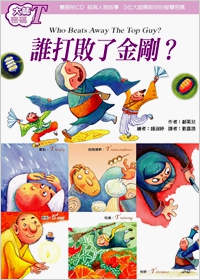
大師密碼T:誰打敗了金剛?
佛教青少年繪本《大師密碼T》為全彩精裝的中英雙語故事書(附CD),故事精彩、印刷精美、插畫精緻。書中收錄德山、滴水、僧導、弘忍與空也五個大師故事,萃取大師的人格密碼,除可培養優秀、美好人格,還可以邊讀故事邊學習英語,是陪伴青少年成長的優質讀本。精美插畫‧美的饗宴《大師密碼T》是插畫家鍾淑婷的最新力作,長於塑造故事人物的淑婷,筆下人物總有一種幽默的趣味感。不論畫的是大師還是小人物,每一個都畫得活靈活現,連壞人都變得可愛了!用色豐富飽滿的她,這次再度施展她的「彩色佛法」,除了把麻繩變麵條、變長鬍鬚,還有許多創意點子等你來一起遊戲。《大師密碼T》收錄五篇精彩的大師故事德山密碼:Transcendence 自我提昇誰打敗了金剛?自信滿滿的德山,滿腹的學問為什麼會被賣餅老太太的「一句話」打敗了? 滴水密碼:Thrifty 節約好大的小水滴什麼老師這樣重要,讓滴水不惜在大雨中連站七天,只為了請老師收他為徒?僧導密碼:Trust 信任終極大保鑣手無寸鐵的僧導,面對來勢洶洶的大軍,他要如何退敵解救皇子?弘忍密碼:Training 培養掃出一地的智慧大師的老師可說是「大師中的大師」,看弘忍如何培養出「南惠能北神秀」兩位禪門巨柱?空也密碼:Tolerance 包容把壞人哭成好人哭一哭,壞人就變成好人了?看看空也有什麼法寶,能感化壞人?
作者
NT$
$323
|
85折

人生286期:珍惜要素──吃得環保真有機
珍惜要素──吃得環保真有機不管在哪裡,「吃」一直是眾人矚目的焦點。進入二十一世紀,有「飢荒救星」之稱的基因食品,以及強調傳統、天然,由樂活、慢活風潮帶動的有機飲食。在這兩極端的趨勢下,如何取得「吃」的平衡呢?對佛教而言,飲食是為了滋養身體這個修行道器,除了強調健康,對於飲食的用量、時間,也有獨特看法。本專題以「珍惜」為主軸,結合現今環保概念,為現代人提出另一種飲食觀。本期「特別報導」將由名書法家杜忠誥深入導覽「遊心禪悅──法語‧墨緣‧興學」聖嚴法師書法展,闡明法師寫書法的精神與意義。「焦點話題」這次則藉由國家地理頻道駐會探險家維德.戴維斯(Wade Davis)和聖嚴法師對談「世界盡頭的光明」,帶您一起關懷人類精神困境和地球暖化議題。
作者
NT$
$150

Attaining the Way : A Guide to the Practice of Chan Buddhism 參悟之道 (英文版)
A Guide to the Practice of Chan BuddhismThis is an inspiring guide to the practice of Chan (Chinese Zen) in the words of four great masters of that tradition. It includes teachings from contemporary masters Xuyun and Sheng Yen, and from Jiexian and Boshan of the Ming Dynasty (1368–1644). Though the texts were written over a period of hundreds of years, they are all remarkably lucid and are perfect for beginners as well as more advanced practitioners today. All the main points of spiritual practice are covered: philosophical foundations, methods, approaches to problems and obstacles—all aimed at helping the student attain the way to enlightenment.本書結集了四位禪師的禪修指導,包括明代曹洞宗的博山(無異元來)禪師、臨濟宗的晦山戒顯禪師的禪法,以及近代虛雲法師與聖嚴法師的禪法。內容涵括修行的各個面向,包括哲學基礎、實修方法、問題與障礙的解決,以及如何將修行融入生活中等。書中的資訊無論是對禪修初學者或已經深入修行的人,都能有所助益。
作者簡介
聖嚴法師,一九三○年出生,少年出家,曾於高雄山中閉關六年,並留學日本,獲得立正大學文學博士學位,曾任雜誌編輯、教授、所長以及譯經院院長等,創辦中華佛學研究所、創建法鼓山、僧伽大學、法鼓大學以及社會大學等,在國內設立禪修、文教、慈善等基金會,而分支道場亦遍及於歐、亞、美、澳等各大洲。他是一位教育家、作家,更是一位宗教家和國際知名的禪師,長年在國內外推動「心靈環保」、「種族和諧」及「世界和平」等工作不餘遺力。他所獲得的榮譽獎項中,包括總統文化獎、行政院文化獎、行政院社會領袖和風獎、中山文藝創作獎、中山學術著作獎、斐德烈二世和平獎等十多種。出版著作一百多種,已有十多種語言的譯著。他曾應邀為《中華日報》、《中央日報》、《聯合報》、《中國時報》、《自由時報》等各大報紙,及《天下》、《康健》等雜誌撰寫專欄。
NT$
$833
|
85折
Chan and Enlightenment 禪與悟(英文版)
Chan enlightenment is attained through a sudden encounter; or, it may come about spontaneously after serious and sincere investigation and introspection. Chan philosophy represents a clear current that is empty yet responsive, detached and magnanimous, open and broad-minded, bright and luminous. Chan as a way of life is positive and progressive, free and easy, simple and modest, confident and comfortable. Chan as a way of thinking is to let go of selfishness, self-deceit, self-pity, self-arrogance, and self-confinement, and only then can there be complete boundless freedom. Chan methods teach people to first practice knowing the self, affirming the self, and then shattering the self, and thus the enlightened state will appear. —Master Sheng Yen—
作者簡介
Master Sheng Yen 聖嚴法師(1930~2009年)
聖嚴法師1930年生於江蘇南通,1943年於狼山出家,後因戰亂投身軍旅,十年後再次披剃出家。曾於高雄美濃閉關六年,隨後留學日本,獲立正大學文學博士學位。1975年應邀赴美弘法。1989年創建法鼓山,並於2005年開創繼起漢傳禪佛教的「中華禪法鼓宗」。
聖嚴法師是一位思想家、作家暨國際知名禪師,曾獲臺灣《天下》雜誌遴選為「四百年來臺灣最具影響力的五十位人士」之一。著作豐富,中、英、日文著作達百餘種,先後獲頒中山文藝獎、中山學術獎、總統文化獎及社會各界的諸多獎項。
聖嚴法師提出「提昇人的品質,建設人間淨土」的理念,主張以大學院、大普化、大關懷三大教育推動全面教育,相繼創辦中華佛學研究所、法鼓佛教學院、僧伽大學、法鼓大學等院校,也以豐富的禪修經驗、正信的佛法觀念和方法指導東、西方人士修行。
法師著重以現代人的語言和觀點普傳佛法,陸續提出「心靈環保」、「四種環保」、「心五四運動」、「心六倫」等社會運動,並積極推展國際弘化工作,參與國際性會談,促進宗教交流,提倡建立全球性倫理,致力世界和平。其寬闊胸襟與國際化視野,深獲海內外肯定。
Master Sheng Yen was born in 1930 and became a monk in 1943. He conducted a six-year solitary retreat, after which he went to Japan for further study and obtained a doctorate in Buddhist literature at Rissho University. In 1975, he began sharing the Dharma in the US, and in 1989, founded the Dharma Drum Lineage of Chan Buddhism. He authored more than 100 publications in Chinese, English, and Japanese, and received the Sun Yat-sen Art and Literary Award, the Sun Yat-sen Academic Award, and the Presidential Cultural Award, among other honorary awards. He proposed the vision of “uplifting the character of humanity and building a pure land on earth,” founded the Chung Hwa Institute of Buddhist Studies, Dharma Drum Buddhist College, Dharma Drum Sangha University, and Dharma Drum University. Experienced in Chan using correct approaches, he guided practice in both the West and East. Popularizing the Dharma in modern language, the Master initiated movements including Protecting the Spiritual Environment, Four Kinds of Environmentalism, the Fivefold Spiritual Renaissance Campaign, and the Six Ethics of the Mind. He shared the Dharma globally with a broadminded perspective, winning him worldwide recognition.
NT$
$510
|
85折
正在載入更多商品......